Will you really be better off in Dubai?
Tax-free pay looks unbeatable until the rent, the school fees and the car arrive. This puts your UK take-home next to a UAE package — after the real cost of living — and gives you the honest gap.
Your two lives, side by side
Gratuity is paid on basic pay only, not on allowances. Most Dubai offers set basic at 50% to 60% of the total package; your contract states the figure.
Monthly living costs — we've pre-filled UK and Dubai estimates. Edit any to match your life.
| Monthly cost | 🇬🇧 UK (£) | 🇦🇪 UAE (AED) |
|---|
Defaults are indicative mid-market estimates for a UK city vs Dubai (2026).
FX last reviewed 27 August 2026: £1 = AED 4.95.
⚖️ Educational estimate. UK tax and NI use 2026/27 HMRC rates; UAE costs are editable estimates. Two stated assumptions keep the two sides symmetrical: the UAE side credits one year of gratuity accrual at 21 days of basic pay (Federal Decree-Law No. 33 of 2021, Article 51) and the UK side credits the statutory 3% minimum employer pension contribution on qualifying earnings of £6,240 to £50,270 (Pensions Act 2008 auto-enrolment). Both are deferred benefits, not cash in hand this month.
Real UK maths
We apply 2026/27 income tax bands (20/40/45%), the £12,570 personal allowance with the £100k taper, and 8%/2% National Insurance.
The school-fee shock
British-curriculum schools in Dubai are rarely free. We add a realistic fee per child so the comparison is honest, not flattering.
The hidden costs
Flights home, the near-essential car, DEWA bills and health insurance all go in. This is the number your accountant would give you.
What UAE salary do I need to match my UK salary?
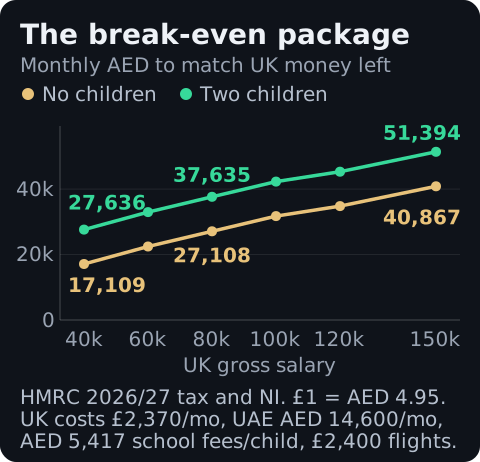
A £55,000 UK salary breaks even at about AED 21,300 a month in Dubai with no children at school, and about AED 31,800 with two. The UK side uses HMRC 2026/27 income tax and National Insurance.
- No children: break-even at AED 21,300 a month.
- One child at school: AED 26,600 a month.
- Two children at school: AED 31,800 a month.
- Each further child at school adds AED 5,263 a month.
Derived 28 August 2026 by running this page’s own ukTax, ukNI, ukEmployerPension and gratuityYearAED functions over the defaults listed below, solving by bisection for the package that makes the two sides equal, at £1 = AED 4.95.
For any other salary, household or set of costs, run your own figures in the calculator at the top of this page. It uses these same four functions and these same defaults.
Every assumption behind these figures, and the date it was set
These are the calculator’s own defaults, read out of this page’s script on 28 August 2026. Change any of them in the calculator above and your own answer replaces ours.
- Exchange rate: £1 = AED 4.95, last reviewed 27 August 2026.
- UK income tax and National Insurance: HMRC 2026/27 — £12,570 personal allowance tapering above £100,000, 20% / 40% / 45% bands, NI at 8% then 2%.
- UK employer pension: 3% of qualifying earnings between £6,240 and £50,270, the auto-enrolment statutory minimum under the Pensions Act 2008. Credited to the UK side.
- UAE basic pay: 50% of the total package.
- UAE gratuity: 21 days of basic pay per year, daily rate = monthly basic ÷ 30, per Federal Decree-Law No. 33 of 2021, Article 51. One year of accrual is credited to the UAE side.
- UK monthly costs, £2,370 in total: rent £1,300, utilities £230, groceries £520, car and transport £320, health insurance £0.
- Dubai monthly costs, AED 14,600 in total: rent AED 9,000, utilities AED 750, groceries AED 2,600, car and transport AED 1,700, health insurance AED 550.
- British-curriculum school fees: AED 5,417 per child per month, which is AED 65,000 a year. Mid-tier, all-in. The same figure the Decode My Offer tool uses. The UK school default is £0, on the assumption of state schooling.
- Flights home: £2,400 a year, charged to the UAE side only.
- What does not vary with household size: rent, utilities, groceries, transport, health insurance and flights are each a single figure. Only school fees multiply, by the number of children. The model has no setting for a single person as against a couple, so it cannot tell you what a partner adds.
- Household: one earner on both sides. No second income, no employer housing or schooling allowance.
Does tax-free pay mean I will be better off?
No. Tax-free pay only wins once Dubai costs are met. A £50,000 UK salary breaks even at AED 20,100 a month with no children and AED 30,600 with two at school, on HMRC 2026/27 rates.
- No children, on £50,000: break-even at AED 20,100 a month.
- One child at school, on £50,000: AED 25,400 a month.
- Two children at school, on £50,000: AED 30,600 a month.
- Three children at school, on £50,000: AED 35,900 a month.
Derived 28 August 2026 from this page’s own ukTax, ukNI, ukEmployerPension and gratuityYearAED functions and the defaults set out above, at £1 = AED 4.95.
Anything above the break-even figure is a real gain; anything below it is a pay cut in disguise.
What does a Dubai package have to cover that a UK salary does not?
Rent, British-curriculum school fees, health insurance, a car and flights home. School fees alone are AED 5,417 per child per month, AED 65,000 a year, on this page’s default set 27 August 2026.
- Rent — normally paid in one to four cheques a year, not monthly.
- School fees — per child, per year, rising with each year group.
- Health insurance — mandatory. Employers often cover the employee but not dependants.
- A car — plus fuel, insurance, tolls and parking.
- Flights home — a recurring family cost that many packages do not include.
Cost defaults set 27 August 2026, read from this page’s own script and editable in the calculator above.
If you are still reading an offer letter, score your Dubai job offer line by line before you accept it.
How does end-of-service gratuity change the comparison?
Gratuity adds one year of accrual to the UAE side. On an AED 40,000 package with basic at 50%, that is AED 14,000 a year under Federal Decree-Law No. 33 of 2021, Article 51.
- Accrual is 21 days of basic pay a year for the first five years, then 30 days.
- The daily rate is monthly basic ÷ 30, so allowances never count.
- Nothing is payable below one year of continuous service.
- The total is capped at two years' wage.
Federal Decree-Law No. 33 of 2021, Article 51; the AED 14,000 figure was reproduced from this page’s gratuityYearAED function on 28 August 2026.
Size your own entitlement with the UAE gratuity calculator, and if you are being let go, read what happens to gratuity after dismissal — dismissal under Article 44 does not forfeit it.
Why doesn’t tax-free pay always mean better off?
Because a tax-free package still has to fund the cost of living. On this page’s defaults Dubai costs AED 14,600 a month before school fees, and each child at school adds AED 5,417 to that. The UK side uses HMRC 2026/27 rates.
Cost defaults read from this page’s own script on 28 August 2026; UK tax and National Insurance are HMRC 2026/27.
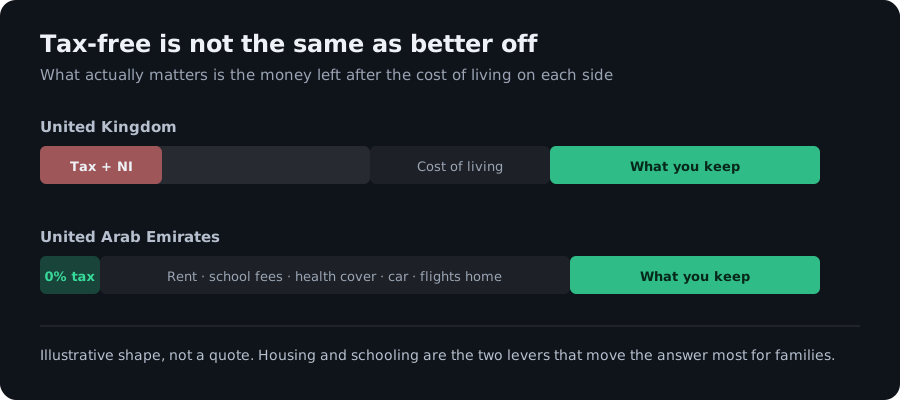
The UAE charges 0% income tax, and that single fact does a lot of heavy lifting in recruitment conversations. It is true and it matters — but it is not the whole answer. What you actually keep is your gross package minus the cost of living it has to fund, and in cities like Dubai and Abu Dhabi that cost of living can be steep. A single professional renting a studio will often see almost the entire tax saving drop straight to the bottom line. A family of four paying for a villa, two sets of British-curriculum school fees and a car can find the same headline salary leaves them no better off than home — sometimes worse.
There is also a 5% VAT to factor into day-to-day spending, and prices for groceries, dining and leisure that can surprise people who expect a low-cost destination. The point of the calculator above is to move you past the headline and onto the only number that counts: what is genuinely left over each year once the real bills are paid. Treat the defaults as a starting sketch and replace them with your own figures the moment you have them.
The real costs to model
The difference between a flattering comparison and an honest one is usually in the costs people forget to include. Budget for each of these in dirhams and edit the calculator accordingly:
- Rent. Your single largest line. It varies enormously by area — established family communities and waterfront districts sit at the top, while more peripheral or older neighbourhoods are considerably cheaper. Don't anchor on a friend's figure; budget for the area you would realistically live in, and remember many landlords still expect rent in a small number of cheques.
- British-curriculum school fees. Per child, per year, and rarely trivial. Fees differ widely between schools and rise as children move up the year groups, so model each child separately and check whether a prospective employer will contribute. This is the line that most often decides the comparison for families.
- Transport and the car. Public transport is good in parts of Dubai but most expat families end up running a car. Budget for the vehicle, fuel, insurance and the inevitable tolls and parking.
- Annual flights home. Easy to leave out, hard to avoid. One or two trips back for the whole family each year is a real recurring cost — some packages include an annual ticket, many do not.
- Healthcare and insurance. Medical insurance is mandatory. Employers often cover the employee but not always dependants, so check whether your spouse and children are included or whether you are funding that yourself.
- Utilities and the everyday. DEWA (water and electricity), cooling charges, connectivity and groceries all add up, and air-conditioning through the summer is not optional.
One item works in your favour rather than against you: end-of-service gratuity. Under UAE Labour Law (Federal Decree-Law No. 33 of 2021) you accrue 21 days of basic pay per year for your first five years and 30 days per year thereafter, capped at two years' pay, once you have completed at least one year of service. Our methodology page sets out how we read the statute, and the already-working-here guide covers what to check on the ground. In the DIFC this is replaced by the DEWS savings scheme. It is a lump sum you collect on leaving rather than monthly cash, but it is money you earn every month you stay, so the calculator above now credits one year of it to the UAE side and labels it separately. Set the basic-pay share to your own contract figure and the accrual moves with it. Size a full entitlement in the UAE gratuity calculator, and if your exit is not on your terms, read what happens to gratuity after dismissal — dismissal under Article 44 does not forfeit it.
How UK take-home is calculated
On the UK side of the comparison, your gross salary is reduced by income tax and National Insurance before you see a penny. For 2026/27, the first £12,570 is covered by the personal allowance and taxed at 0%; income above that is taxed at 20% up to £50,270, then 40% up to £125,140, then 45% beyond. The personal allowance itself tapers away once you earn over £100,000, which quietly lifts the effective rate for higher earners. National Insurance then adds 8% on earnings between roughly £12,570 and £50,270, and 2% on anything above that. Stack those together and a comfortable UK salary can lose a meaningful slice before living costs are even considered — which is the gap a tax-free package is competing against. The calculator applies these HMRC rules for you so the two sides are compared like for like.
If you want to see the UAE side of that maths in isolation, the tax-free take-home calculator breaks down a UAE package on its own terms.
One UK item is easy to forget when you compare the two. Under auto-enrolment your employer must pay a minimum of 3% of your qualifying earnings — the band from £6,240 to £50,270 — into your pension. That is money you keep but never see on the payslip. On £55,000 it is £1,321 a year. The calculator credits it to the UK side for the same reason it credits gratuity to the UAE side: both are deferred benefits, and leaving either one out tilts the answer. Before you fly, work through what to do about your UK tax position when moving from the UK, because the pension question and the residence question arrive at the same time.
How to read your better-off gap
The headline figure is simply UAE money left over minus UK money left over, after tax and after the cost of living on both sides. A large positive number is a clear win; a small positive number means the move stacks up but the margin is thin enough that a single bad rent renewal or fee increase could erase it. A negative number is not necessarily a no — it is a prompt to negotiate. The two levers that move the result most for families are housing and schooling allowances, so if your gap is marginal, those are the first things to push for when you read your job offer carefully.
Remember that the figures here are estimates for guidance, not regulated financial advice. They are a starting point for a sensible decision, not a substitute for one. Once you have a real offer in hand, it is worth pressure-testing the numbers against your actual circumstances — you can message us on WhatsApp to talk it through, and you can read how we work and where our figures come from on our how we work page.
PayslipIQ UAE is free and privacy-first. Everything here is educational and general in nature; it is not regulated financial, tax or legal advice. All figures are estimates and FX is taken at £1 = AED 4.95, last reviewed 27 August 2026.
Honest comparison FAQs
Is Dubai always cheaper because there's no tax?
Where do your default costs come from?
Does this include gratuity?
UK vs UAE FAQs
Does no income tax mean I'll automatically take home more?
How much should I budget for rent in Dubai?
What about British-curriculum school fees?
How is the UK side worked out?
Is end-of-service gratuity included in the gap?
What is DEWS and how does it differ from gratuity?
What costs do people most often forget?
Are these figures financial advice?
Got your number? Now protect it
Before you fly, sort your UK tax position so you don't pay twice. Our moving guide walks you through it.
Read: Moving from the UK →